![[NEW] Marcus Trumpp [“Mutiny” - OST Composer]](images/exclusive/interviews/INT-MarcusTrumpp5.jpg) [NEW] Marcus Trumpp [“Mutiny” - OST Composer]
[NEW] Marcus Trumpp [“Mutiny” - OST Composer]
“There’s blood in the water!”
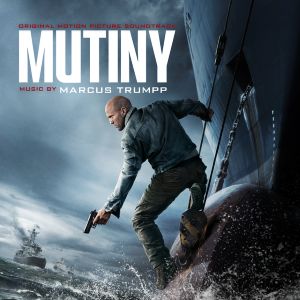
For those not in the know, Filmtrax LTD. today releases the MUTINY ORIGINAL MOTION PICTURE SOUNDTRACK with music by composer Marcus Trumpp.
Available everywhere now, the album features Trumpp’s original score from the action-packed thriller.
For Mutiny, Trumpp crafted a predominantly electronic and synthetic score, built around a custom instrument he created called the Carnage Organ.
The music evolves from an ominous foghorn-like sound, establishing a gritty, grounded atmosphere that complements the film’s intense action and the director’s signature style.
The score also introduces a distinct musical theme for Cole, the film’s central character portrayed by Jason Statham, underscoring his relentless determination and emotional journey throughout the film.
In his distinguished career spanning over two decades, Marcus Trumpp has been honored to be part of a multitude of projects that accumulated over $10 billion at the box office worldwide.
These include hits such as Fear Street, Renfield, Venom: Let There Be Carnage, Logan, A Quiet Place, 2012, Live Free Or Die Hard, World War Z, The Emperor Of Paris, The Drop, and November Man. One of his upcoming projects is Clown In A Cornfield for Sony Pictures.
From subtle yet suspenseful melodies in The Woman In Black and Hollow Man 2 to action-packed movie scores such as Plane and Love & Monsters, Marcus has shown he knows how to sweep an audience musically off its feet.
In his spare time, he enjoys photography, cooking, traveling with his family, immersing himself in video games, and experiencing the most thrilling roller coasters worldwide. He currently lives in Los Angeles, California.
I sat down with composter Marcus Trumpp and discussed everything about the musical soundscape he created for Mutiny, a new instrument that he himself created and also used, along with where he found his new sounds these days, and even what he has upcoming:
Marcus, for your new score to the new Jason Statham all-action movie Mutiny, you had to make it a darker, more experimental in tone sound, for the most part, so do you become more attune to other darker-sounding works/noises around you (that relate, in this instance, to ships and such) before tackling such a soundtrack, perhaps? - “The soundscape and palette I created for the score posed some interesting challenges. I do tend to become more attuned to sounds that are specific to a project, or that belong to the world and atmosphere of the material. It seems to happen subconsciously, but when I’m actively hunting for sounds and textures, I keep a small handheld recorder nearby so I can add anything interesting to my grab bag.”
“For Mutiny, the palette was a mixture of several things. The sounds of being below deck or buried deep inside a ship’s hull were immediate starting points. I recorded metal sheets, gongs and cymbals, as well as a metal shipping container struck with all kinds of mallets and beaters, including a sledgehammer. That particular sound appears in a select few “big” places in the score. These recordings were perfect for building the percussive layers and became part of the foundation of the score’s signature sound.”
“Early in the project, I happened to be near San Pedro for a family event, so I went for a walk with my phone to see if I could capture anything useful. I came away with several foghorn recordings, one of which I was able to clean up and process further in the studio. It is the very first sound heard in the film: it opens the first track and gradually morphs into the “Artemis” motif, which itself grew out of another sound I captured during one of those early exploratory recording trips.”
“Alongside the field recordings, I also tuned my studio sound-design setup toward a particular sonic character before I began generating material for the score. For example, I recorded a cellist playing some basic grooves and then ran those recordings through an array of metallic filters, bit-crushing distortion and tape echoes designed to mimic the behavior of sound traveling through a massive metal structure such as a ship’s hull.”
“So, essentially: cello groove in, percussive metal cello out.”
You actually created a one-of-a-kind instrument for this soundtrack, so why did you have to do that, what did you call it, what does it do, and will it be used on any of your forthcoming soundtrack work? - “The instrument is called the “Carnage Organ.” I first began developing it while working on Venom: Let There Be Carnage, and I expanded it considerably for Mutiny to support the rusty, metallic character of the score.”
“The original idea grew out of a technique I became interested in during the early 2010s through the experimental electronic group Emptyset. Their process involved distorting a parallel mixture of simple sine waves and white noise, running it through filters, and then feeding the result back into itself. What began as a relatively simple method evolved into a tool capable of manipulating and destroying sound in creative and musical ways - with varying degrees of success, and plenty of surprises I might add.”
“Over the years, I refined the process into something flexible enough to work on any project that calls for a distinctive, original soundscape. The feedback in this array is the key component: it can be drawn from any one of the parallel processing lanes and then reintroduced into the system, continuously adding new layers and creating textures that evolve over time. The results can be… wild.”
“There are very few limits to how the Carnage Organ can be used, and I can tailor it to the particular sonic character of each project. On Mutiny, I used it to generate deep, constantly evolving rhythms and percussive layers, as well as the unsettling atmospheres and pads heard throughout the score.”
“I have continued using the instrument on every project since. For the upcoming film Quasimodo, I recorded a Hammond B3 organ and processed it through the array. For an upcoming horror film called The Caged, I fed whispers and vocal recordings into it to create eerie, evolving soundscapes.”
“Fun stuff!”
Embracing a lot of electronic textures and synthetic elements, were the majority of these computer-generated sounds, or do some have a kernel of real instrument within them? - “Every sound in the score has an organic origin, even when the result appears electronic or synthetic. A pad or impact might begin as a tiny piece of audio from something like a close-mic cello snap, which I then run through an array of distortion and delay pedals and filters. The results vary, but my general aim is to arrive at something that sounds nothing like its original source.”
The film, once it gets going, is chock full of a driving tension and brutal action, so how was it for you to, for the first 20 minutes of the movie, write a more passive soundtrack, only for it to explode for the next two-thirds of the film? Is your composing done in a linear style, I guess is what I am asking? - “The first 20 minutes were extremely useful because they gave me room to introduce Cole’s theme, establish the musical material for Cole and Tibu’s relationship, and gradually define the film’s soundscape.”
“The film opens with the foghorn, which then morphs into the “Artemis” motif—an ostinato built around a minor-seventh interval that evolves but never fully resolves. It was intended to embody the relentlessness of the ship moving through the fog: something ominous that cannot be stopped.”
“On Mutiny, I worked fairly chronologically, which is my preferred way to compose. I like to approach a film almost as an audience member—discovering and experiencing the story as it unfolds. That allows the musical language to evolve alongside the characters and the narrative.”
“Once Cole is aboard the Artemis and the ship is underway, the score begins moving with it, and the action and suspense take over.”
And did you get to see the whole film well ahead of its theatrical release to enable you to create the pockets where your score needed to fit? Or are you only shown those moments in clips, and maybe even out of order? - “I was able to see the film in its entirety throughout the process. The music has to span long dramatic arcs, and I don’t think that can be done successfully when you are working only with isolated clips.”
“There were a handful of occasions when I received updated sections, but those were primarily to show how the finished or revised visual effects would look. Those changes sometimes affected the music as well. In general, though, we need to see the complete film in order to make musical sense of it.”
How long did it take you—start to finish—to compose this soundtrack score? - “I was shown a rough cut in January 2025, but I didn’t begin writing the score in earnest until early April. The final dub began during the second week of June, so I had approximately eight weeks to write and produce the score.”
If you have seen the film in full now, complete with your score attached throughout, are you happy with the end result, or are there one or two scored moments where you are still wishing you had tried something different? - “There are always moments I wish I could have spent more time polishing. While working on a film, you rarely hear the soundtrack fully realized as the filmmakers ultimately intend it. Instead, you work with whatever is available during the edit: production dialogue, temporary sound effects and other unfinished elements.”
“I am very happy with the result—and some moments turned out even better than I had imagined—but if I could revisit two scenes, the first would be the sequence in which Cole creates a diversion and makes his way to the bridge. There is a great deal of back-and-forth designed to heighten the tension, followed by a long build toward Captain Marco realizing that Cole has played him. I would love another pass at the rising elements leading into the cue’s climax, just to make them even more intense.”
“The second is a scene below deck in which Cole hides inside the air vents and is surrounded by a group of goons. A section of the music was ultimately removed so that the scene could play dry—and feel even more tense—as they close in. When the cue returns, I wish its re-entry had been more forceful. At the time I wrote it, however, I didn’t know the preceding section would end up without music.”
“Sometimes the score has to give the sound effects room to work, and vice versa.”
Finally, and with over 100 cinematic soundtrack scores to your name, what is next for you that is already in the can and that we can look forward to watching and listening to? - “Of the projects I am allowed to discuss, definitely keep an eye—and an ear—out for Quasimodo, a Netflix film directed by Mutiny director Jean-François Richet. I co-composed the score with my partner in crime, Marco Beltrami, and for this period piece we moved in a more traditional orchestral direction. The score combines the emotional beauty of the characters’ stories with a bizarre and horrific soundscape representing the cholera epidemic that plagued Paris at the time.”
“Also look out for The Caged, a horror film directed by Jeffrey Scott Collins. It will feature a great deal of sound design created with the Carnage Organ and the methods I described earlier.”
Mutiny | Official OST Purchase Links
Mutiny | Official Trailer
www.mutiny.movie
www.marcustrumpp.com