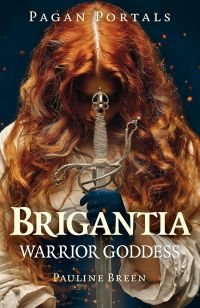
Pagan Portals: Brigantia
By: Pauline Breen - Moon Books - $12.95
Overview: Brigantia - Warrior Goddess looks at another face of Brigid. It considers the possibility that she existed in Northern Britain as the mother goddess Brigantia, who flourished as a warrior goddess during Roman occupation.
From Roman Inscriptions of Britain and linguistic examination, we can uncover a unique personality for both the Celts and the Romans, whom they called Brigantia.
Verdict: A Goddess in Celtic religion of Late Antiquity, Brigantia was also thought to have been the patron goddess of the Brigantes, who were a tribe centered around what is now known as Yorkshire and northern England.
Over the years much has been garnered about Brigantia from what is today called Interpretatio Romano, which in and unto itself was the Roman practice of conflating the native deities of the lands they conquered with their own gods and goddesses. Indeed, when this was done to Brigantia in northern England, they conflated her with Minerva, and to a lesser extent Fortuna and Victoria.
Furthermore, and dipping a little deeper into her heritage, the name of the Brigantes tribe shares the same Proto-Celtic root as the goddess Brigantia, with brigant meaning “high, elevated”. In modern Welsh the word braint means ‘privilege, prestige’ and comes from the same root brigantī.
But I digress, for Pagan Portals: Brigantia - Warrior Goddess by author Pauline Breen is an expertly researched new prose on Brigantia, herself closely related to Brighid as Goddess of the Land.
Along the way we learn - amongst a whole slew of other things - that Brigantia has always been associated with water and has several rivers named after her throughout the UK. Indeed, when the Romans arrived they equated her with their Goddesses Victoria and Minerva, the Goddesses of victory and war and wisdom respectively. That said, other regional Goddesses are also associated with her including the Irish Brigit and Gallic Brigindo.
As the author also lovingly informs us, Brigantia as goddess of the land to both Celic and Roman cults may indeed stem from the manifestation of the great mother goddess brought into Britian through the Belgae, Goidels, and the Gauls. Her mother goddess energy may also have come with the Romans through Isis who had been assimilated into Roman culture.<>
Regardless of the mother goddess origins, Brigantia, as a mother goddess figure was common to both cults and her identity as such was closely connected to the land.
All this and so much more contextual history building that surrounds Brigantia is lovingly brought forth here within a book that is as academically engrossing as it is cerebrally fascinating.
About the Author - Pauline Breen is passionate about showing the various faces of Brigid that are often overlooked. She has written three books on Brigid: This is Brigid - Goddess & Saint (Self-published), Maman Brigitte and Brigantia. She lives in Offaly, Ireland.
Official Book Purchase Link
www.collectiveinkbooks.com










 Pagan Portals: Brigantia